Even if fine bourbon isn’t something you personally enjoy, you may still be familiar with one of the most well-known names in the distilling world – Pappy Van Winkle.
This world-famous distiller’s legal name is actually Julian Proctor Van Winkle Sr., the name he went by when he was growing up in Danville, a fact that is not exactly well known in the town where he lived through the age of 19.
Pappy’s mark on the bourbon world is legendary, but the memories of his connection to Danville faded over the years. His upbringing here came as a surprise to many long-time residents who learned that Pappy was from Danville during research being done in 2025 to find out more about his childhood years. After all, it was 1893 when – after a year attending Centre College and playing on the baseball team there – Pappy moved on to the big city of Louisville, where he got his foot in the stillhouse door and worked his way up the ladder to become one of the biggest names in bourbon.
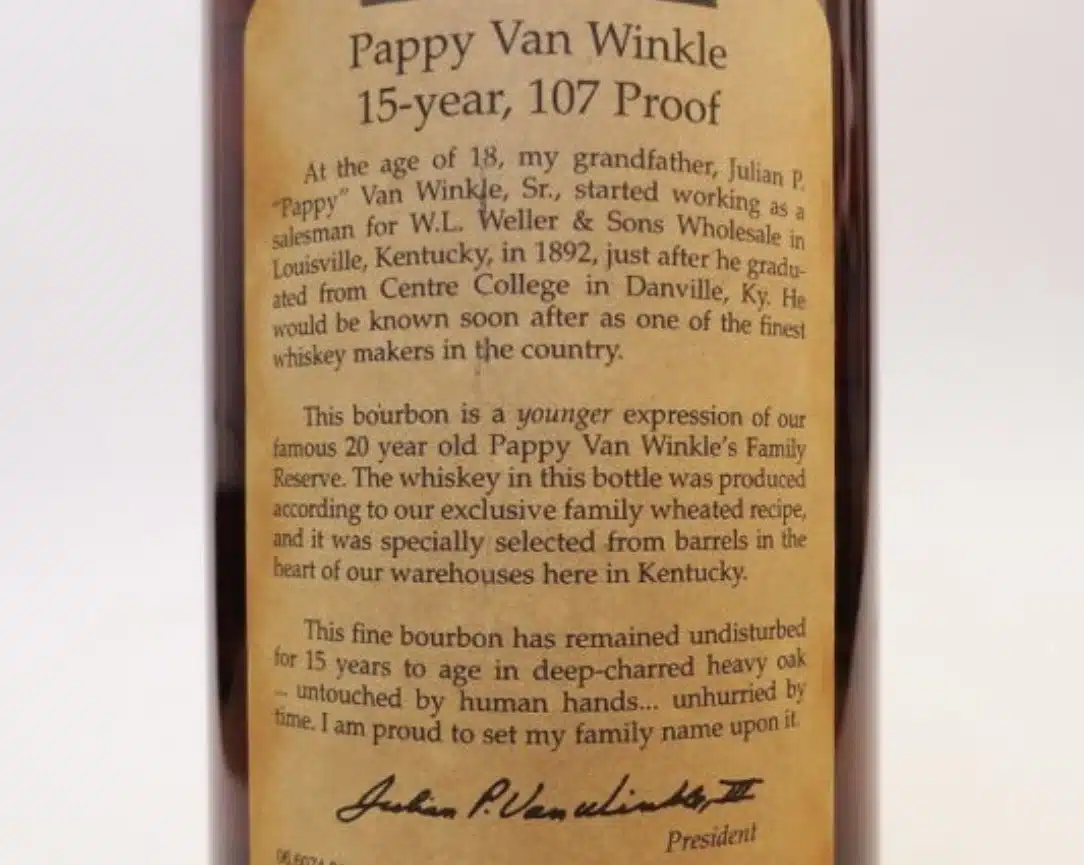
Though he had no prior bourbon or distilling experience, Pappy needed a job and went to work as a salesman for Mr. W.L. Weller’s wholesale liquor business. Even though today most people know “Pappy” from the rare and much sought after product that bears his name, he became an industry icon when the W.L. Weller Co. merged with the P.H. Stitzel Distillery to form Stitzel-Weller in 1933. The new Stitzel-Weller Distillery opened on Derby Day in 1935, eventually becoming one of the most successful and admired companies in the industry.
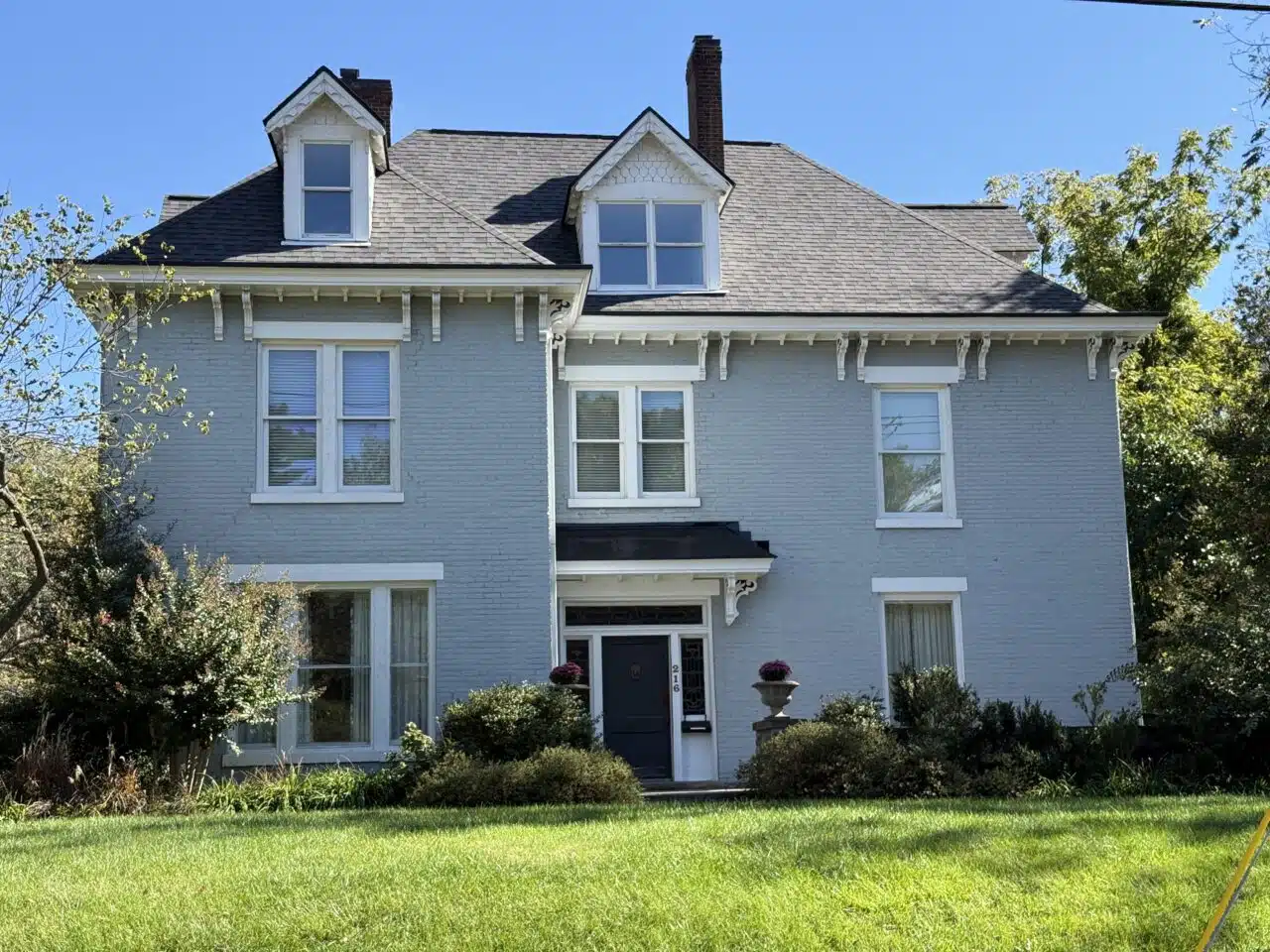
Before all of that, though, he was just a kid living with his family in Danville, with a childhood that wasn’t well documented, other than a few newspaper clippings that mention his name, mainly related to the Centre baseball team, and stories passed down among family members. The memory of Pappy’s connection to Danville was largely lost to time, but the recent research led to a very interesting discovery – Pappy’s childhood home is still standing in Danville, which came as a surprise to the current owners, Alan and Katie Turbyfill.
“When we bought the house from Debbie Wheat in 1996, we knew it dated back to the mid-1800s but knew little about the previous owners other than the Wheats and the Bairds who owned it for many years before them,” Alan said.
Alan and Katie had never traced the deed back on their house to see who had owned it over the years. At least not until it was discovered that it might have been the former Van Winkle family home.
According to 1880 U.S. Census records, Julian P. Van Winkle – then age 6 – lived at 208 Harrodsburg Street with his father, mother, four brothers, other relatives and laborers. A later change to the street name – making it Maple Avenue – and an apparent shuffling of addresses made tracking down Pappy’s childhood home – to see if it even was still standing – a bit of a challenge.
But with a little luck, a lot of research, and the right set of records, it was confirmed that the former Van Winkle residence is now the current Turbyfill residence, changed at some point in history from 208 Harrodsburg Street to 216 Maple Avenue. The Van Winkle’s owned the house from 1875 until 1915. It became known locally as the “Old Van Winkle Home” – a description used for a number of years after the house changed ownership – but eventually faded with time.
While the “discovery” of the former Van Winkle home was very much a surprise to the Turbyfills, it was also of great interest to Pappy’s living descendants, most of whom knew little about Pappy’s childhood home.
On an overcast day back in early November 2025, several of those descendants gathered in the conference room of the Robert Patterson CPA office in Louisville to learn from Alan Turbyfill and Danville-Boyle County Convention and Visitors Bureau Executive Director Kendall Clinton about the results of the research into Pappy’s early years in Danville. The family also shared their own memories of the man who was grandfather and great grandfather to several of those who were there. Many of them still work in different facets of the bourbon world today.
Though Pappy’s years in Danville were long forgotten by most people, there is now work being done to try to keep that memory and the information alive for years to come. The Kentucky Historical Society administers the state’s Historical Marker Program. You’ll find examples of those markers throughout the state, and many locally at Constitution Square, outside of the Boyle County Courthouse and at several other places around Boyle County. An application is being compiled to request a marker be added outside of the “Old Van Winkle Home.”
Getting a historic marker approved is by no means guaranteed, though you’ll certainly hear about it if it does. Regardless of whether a marker does get put up, Danville can now claim a greater stake in Kentucky’s world-famous bourbon industry as the original home of the legendary distiller whose name and likeness are synonymous with a high-end experience, whether it is served neat or on the rocks.